The Iberian Pig: The Breed Behind Blue House Iberico
An Ancient, Purpose-Built Breed
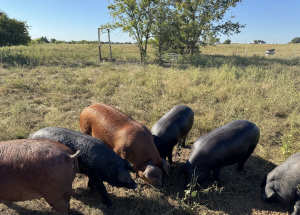
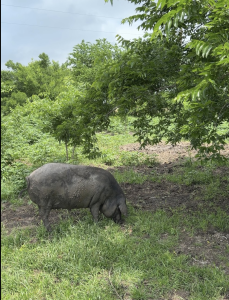
The Iberian pig (cerdo ibérico) is a distinct breed native to the Iberian Peninsula, descended from wild boar and shaped by centuries of adaptation to the “dehesa” — the oak-forest rangeland of western Spain and Portugal. It’s a medium-sized animal on slender legs, with pigmented, often black, skin and hooves — hence the nickname “pata negra” or “black hoof.” Coat color varies by line, from deep black to reddish-cinnamon, but the underlying animal is the same across all of them.
What sets the breed apart isn’t looks — it’s biology. Iberian pigs carry a rare genetic capacity to store fat within the muscle tissue itself, not just around it. That’s the source of the marbling that defines Iberico pork: fine streaks of intramuscular fat running through the meat, giving it a silky texture and nutty depth of flavor that no ordinary breed replicates, especially once it’s finished on acorns and forage.
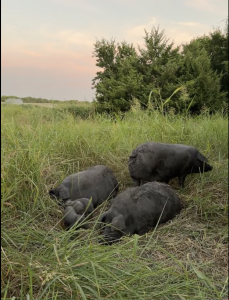
Historically, the breed thrived because it fit the land: hardy, foraging, free-ranging animals suited to rooting through oak forest for acorns rather than confinement feeding. That free-range, acorn-driven system — the “montanera” — is as much a part of the breed’s identity as its genetics.
Within the Iberian breed there are a handful of recognized lines, sorted mainly by coat color and hair coverage (black lines like Negro Lampiño, the red Retinto line, and a couple of rarer ones). Blue House’s herd is Retinto — but the traits that actually matter for the meat’s quality (the marbling gene, the foraging instinct, the response to an acorn-rich diet) belong to the Iberian breed as a whole, not to any one line within it.
Why It Functions as Spain’s National Food
Spain has no legally designated “national dish,” but jamón ibérico occupies that space culturally more than almost any other food could. A few reasons it holds that status:
– Deep history — pig-rearing and salt-curing on the Iberian Peninsula trace back to pre-Roman tribes, with the practice shaped further under Phoenician trading influence. Cervantes referenced ham in *Don Quixote*; it’s been woven into Spanish life for centuries.
– Everyday ritual, not just delicacy — it appears at breakfast, as tapas, at weddings, holidays, and family gatherings. In some tapas bars, several whole hams are carved through in a single day.
– National pride and identity — it’s often described as being “as emblematic of Spain as the national flag,” and producers and chefs alike talk about serving it as an act of pride in what the country does best.
– A shared ritual of slicing and savoring — thin slice by thin slice, meant to be lingered over rather than consumed quickly.
Where Blue House Fits In
Raising Iberian genetics on Texas pasture — rotationally grazed, foraging freely, finished on acorns, pecans, and walnuts — is essentially recreating the “dehesa” system that makes this breed what it is, just on Texas soil instead of Extremaduran oak savanna. The breed does the rest.